Chicago, IL
Available 24/7 - Please Call for an Appointment
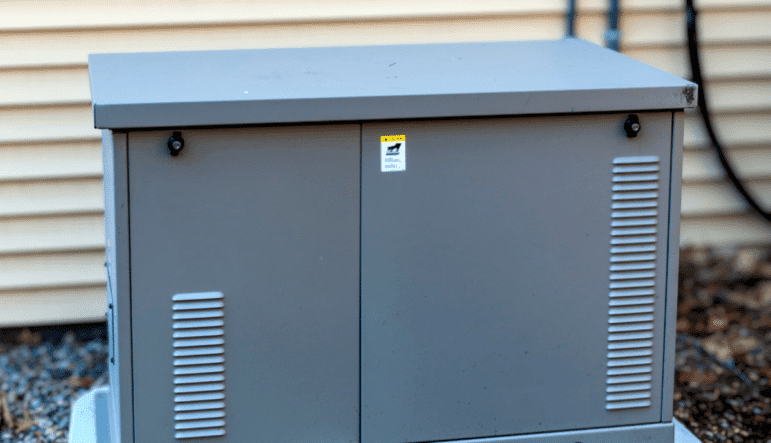
When the power goes out in a Chicago storm, the first thing many homeowners think about is the sump pump in the basement. Next come the furnace, the fridge, and whoever in the house relies on medical equipment. A whole-house standby generator takes care of all of that automatically, and it’s a big purchase, so most people start by asking what it will cost.
National cost guides put a typical installed whole-house generator at about $6,000 to $11,000. Larger units (over 20 kW) and long gas or electrical runs push that to roughly $9,500 to $24,000. Chicago installs usually land toward the upper half of those ranges because labor here costs more, lots are tight, and the city requires drawings and a permit. Only an on-site look at your panel, gas meter, and yard gives you a real number, and that visit is the first step of any home generator installation.
Cost guides don’t agree on one figure, partly because “generator” covers everything from a portable unit to a 48 kW standby system. Here’s what the major sources report for permanent, automatic standby generators:
| Source | What it measures | Range reported |
|---|---|---|
| HomeGuide (Dec. 2025) | Whole-house generator, installed | $6,000 to $11,000 typical; $9,500 to $24,000 for units over 20 kW or long runs |
| Home Depot installation service (2026) | Installed standby generator, by unit size | $5,000 to $12,500 |
| Angi (Sept. 2026) | Whole-house generators, 22 to 48 kW | $5,000 to $18,000 |
| Rehlko / Kohler (2026) | Home standby, equipment and installation | “Several thousand dollars” up to “well over $20,000” |
Even a single guide can give very different numbers. Angi reports a national average of $5,156 from its project data, and in another section cites an average of about $17,000 for whole-house systems compared with partial-home ones. The gap comes down to what each figure includes, which is why it helps to look at the line items.
A generator quote is really several jobs bundled together. Knowing the pieces makes it easier to compare quotes and to see why two homes on the same block can get very different numbers.
| Line item | Typical range | Source |
|---|---|---|
| Generator unit only, 22 to 25 kW | $4,500 to $12,000 | HomeGuide |
| Installation labor | $3,000 to $5,000 average | HomeGuide |
| Automatic transfer switch, installed | $400 to $2,500 | HomeGuide |
| Gas line from meter to generator | About $12 to $25 per foot, sometimes more | HomeGuide |
| Electrical wiring run | About $6 to $8 per foot | HomeGuide |
| Concrete pad | $150 to $400; about $1,000 for a poured 3 by 6 foot pad | HomeGuide; Angi |
| Subpanel or panel work, if needed | $500 to $2,000 | Angi |
| City of Chicago generator permit item (1 to 3 unit homes) | $75, plus any zoning fee | City of Chicago fee schedule |
The transfer switch is the part people forget about. It’s the device that senses an outage, disconnects your home from the utility lines, and switches the house over to the generator. It also keeps generator power from flowing back onto the grid, where it could hurt a utility worker. Every permanent standby install needs one, and it should always be in the quote.
The biggest single factor in price is capacity, measured in kilowatts (kW). Here’s how Angi’s 2026 price ranges climb with size:
| Generator size | Price range |
|---|---|
| 14 to 18 kW | $4,000 to $5,500 |
| 20 to 24 kW | $5,000 to $6,500 |
| 26 to 32 kW | $6,500 to $15,000 |
| 36 to 38 kW | $14,000 to $16,000 |
| 45 to 48 kW | $16,200 to $21,000 |
Source: Angi, updated September 2026.
How big you need to go depends on what you want running during an outage. Home Depot notes that 20 to 24 kW units are the most popular choice for homes up to and over 3,000 square feet. A home with central air, an electric range, or an electric dryer that all need to run at once may need more. If you only want the essentials (furnace, sump pump, fridge, some lights and outlets), a smaller unit can do the job for less money.
The right way to size a generator is a load calculation, where an electrician adds up what your home actually draws. In Chicago, a load calculation is part of the permit paperwork anyway. Many installs also use load management, which lets a smaller generator cover a bigger house by briefly shedding big appliances like the AC when the generator is near its limit.
National averages don’t account for a few things that come up constantly in Chicago and the close-in suburbs.
Angi’s Chicago data puts professional labor for generator work at about $140 to $150 an hour. HomeGuide’s national figure for electricians is $50 to $130 an hour. Since installation is a big share of the total, local labor alone moves the number.
Standby generators need breathing room. Generac’s guidance, based on the NFPA 37 fire code, calls for the unit to sit 5 feet from any operable window, door, vent, or window well. Models tested for it (look for the SwRI label) can sit 18 inches from the wall, and the unit needs 3 feet of clearance at the front and ends and 5 feet overhead. On a narrow city lot or a gangway between two-flats, finding a spot that meets those rules can take some planning. A longer run to a workable spot adds gas line and wire, and both are priced by the foot.
A whole-house generator burns a lot of natural gas when it runs. In some older homes the existing meter or gas line can’t supply the generator and the furnace, water heater, and stove at the same time. If yours can’t, you may need a meter upgrade from your gas utility (Peoples Gas in the city, Nicor Gas in many suburbs) and a larger gas line, which adds cost and time. Home Depot lists a new natural gas meter among the common extra charges on generator installs.
Plenty of Chicago homes still run on older or smaller electrical service. If your panel is full, failing, or undersized, it may make sense to deal with that before or during the generator install. Our guide to electrical panel replacement cost covers what that work runs, and our panel upgrade service page explains when an upgrade is the smarter move.
Yes. In the City of Chicago, installing a new permanent generator, or fully replacing an existing one, is permitted electrical work. Here’s what the city’s own guidance says:
Your contractor should handle the permit and inspection as part of the job. If a quote doesn’t mention a permit, ask why. Suburbs run their own permit processes and fees, so if you’re outside city limits, check with your village or have your installer confirm.
Most Chicago-area homes already have natural gas service, which makes it the simplest fuel for a standby generator. There’s no tank to fill, and running costs are lower. HomeGuide estimates a 20 kW generator costs about $30 to $40 a day to run on natural gas, versus about $150 to $170 a day on propane.
Propane makes sense where there’s no gas service. It adds a storage tank and refills, and tank installation is its own line item. Estimates for that vary widely: HomeGuide puts propane tank installation at $400 to $1,800, while Home Depot estimates $5,000 to $8,000. Get it priced for your property if it applies to you.
A whole-house generator isn’t the only option. Depending on your budget and how often you lose power, one of these may fit better:
One thing that isn’t an option: plugging a portable generator into a dryer outlet or any other outlet to “backfeed” the house. It’s dangerous for you and for utility crews working on the lines. Any generator that powers your home’s wiring needs a transfer switch or interlock installed by a licensed electrician.
The price tag doesn’t stop at installation. A standby generator needs regular service (oil and filter changes, battery checks, and exercise cycles) so it actually starts when you need it. HomeGuide puts professional maintenance at about $200 to $650 a year. Fuel use during outages is the other running cost, covered above.
A generator also pairs well with whole-house surge protection, since outages and the moment power comes back are both hard on electronics and appliances.
Quotes can look very different even for the same generator. When you’re comparing them, check that each one spells out:
Be cautious with a quote that’s far below the others. It usually means something was left out, such as the permit, the gas work, or the transfer switch, and that gap comes back as a change order or a failed inspection.
Most whole-house standby generators cost about $6,000 to $11,000 installed, according to HomeGuide, and units over 20 kW or installs with long gas and electrical runs can reach $9,500 to $24,000. Chicago installs tend to land toward the higher end because of local labor rates, permit requirements, and tight lots.
Many homes up to about 3,000 square feet use a 20 to 24 kW generator, according to Home Depot, but the right size depends on what has to run at the same time. Central air, electric cooking, and electric heat all push the size up. A load calculation from an electrician is the reliable way to size it, and in Chicago it’s required for the permit.
Yes. The City of Chicago treats a new permanent generator as permitted electrical work. The application needs a single-line diagram and load calculations, and a licensed electrical contractor has to do the work. Suburbs have their own permit rules.
A licensed electrician handles the transfer switch, wiring, and connection to your panel, and in Chicago a licensed electrical contractor has to pull the permit. The gas connection is a separate part of the job, so ask who on the crew is responsible for it.
Usually, yes. HomeGuide estimates a 20 kW generator costs about $30 to $40 a day to run on natural gas, compared with about $150 to $170 a day on propane. Most Chicago-area homes already have natural gas service.
Every figure on this page is a range. What you’ll actually pay depends on the size you need, where the generator can go, your gas meter, and your panel. A Mr. Mighty electrician can look at all four, size the system with a proper load calculation, and handle the Chicago permit and inspection.
Learn more about our home generator installation in Chicago, or call (773) 406-7500 to set up a visit.

I’m Ed Morales, owner of Mr. Mighty Electric in Chicago. I’ve helped homeowners and businesses with everything from quick repairs to major electrical upgrades. My team and I take pride in being reliable, straightforward, and always putting safety first.