Chicago, IL
Available 24/7 - Please Call for an Appointment
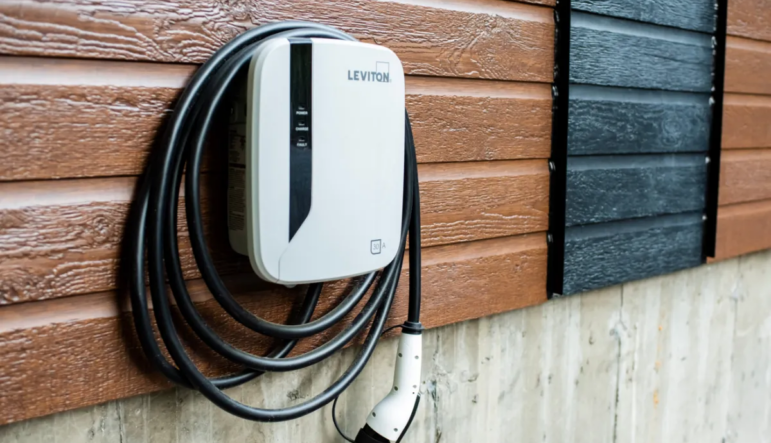
ComEd’s home EV charger rebate can cover a big share of a Level 2 charger install in Chicago and the suburbs. It also has rules that catch people off guard: a required rate change, an approved-installer requirement, and a payment that goes to the contractor instead of to you. This guide covers how the ComEd EV charger rebate works for 2027 and what tends to slow applications down.
For 2027, ComEd’s Residential EV Charger and Installation Rebate pays up to $750 toward a Level 2 smart charger and its installation, or up to $2,500 for income-qualified customers and homes in eligible communities. Applications open January 1, 2027, and you’ll need a ComEd-approved installer and three years on a time-based rate.
ComEd has posted two rebate levels for applications submitted between January 1 and December 31, 2027:
| Rebate level | Who it’s for | Maximum rebate |
|---|---|---|
| Income-qualified / eligible community (LI/LIC/EIEC) | Income-qualified households, or homes in a ComEd-designated low-income or Equity Investment Eligible Community | $2,500 |
| Standard | All other ComEd residential customers | $750 |
The rebate applies to both the charger and the installation: contractor labor, conduit, cable, fasteners, and electrical panel work all count. Under ComEd’s program terms, the rebate can’t exceed 100% of what the project actually cost, and it’s limited to one rebate per customer.
To see which level you fall into, use the eligibility map referenced in ComEd’s program terms (linked from ComEd’s EV charger rebate page), or ask your installer to check your address. Homes inside a designated community qualify for the higher amount by location alone; everyone else can qualify for it based on household income.
Funding is limited and awarded first come, first served by the date of a complete application. That timing matters: ComEd stopped accepting 2026 applications on March 31, 2026, and there was no waitlist. If you’re planning an install in 2027, earlier in the year is safer.
You get the savings, but ComEd pays the installer.
Under the program terms, the rebate shows up as a discount on your installer’s final invoice. The installer then files the application, and ComEd mails the rebate check to that installer, typically within 8 weeks of a complete, error-free application. The payee on the rebate form has to be the same approved installer who did the work.
For you, that means no check to wait for and no application to file. For the contractor, it means fronting the rebate amount, assembling the paperwork, and waiting to be reimbursed. That’s also why a missing photo or a rate switch that hasn’t gone through yet matters: until ComEd has a complete application, nobody gets paid.
Before you sign a quote, make sure the installer is on ComEd’s list of approved EV Service Providers (ComEd links the list from its rebate page), and that the expected rebate appears as its own line on the quote and the final invoice.
Based on ComEd’s current program terms, you need:
You don’t need to own or lease an electric vehicle yet. A few products are excluded outright, including Enel X JuiceBox chargers, power splitters, and adapters, so check the model before you buy. ComEd publishes updated terms for each program year, so confirm the 2027 details when they post.
To get the rebate, the ComEd account holder has to enroll in one of these rate options for at least three years:
ComEd warns that switching rates can take time, isn’t guaranteed, and can delay your rebate. Start the switch as soon as you book your install. If you have solar on net metering, check how a rate change affects your energy credits before you switch.
For most EV owners, the math leans in your favor because a car can charge when power is cheapest. Hourly prices are usually lowest overnight, and nearly every Level 2 smart charger lets you schedule charging from an app. The trade-off is that summer afternoon prices can spike, which hits households that run a lot of air conditioning during those hours. If your heaviest usage lands in late afternoon, compare Delivery Time of Day too. Either way, you’re committed for three years, so pick the plan that fits how your household actually uses power.
ComEd isn’t accepting 2026 applications, and the 2027 window opens January 1. Because the installer has 90 days from the install to apply, timing a late-2026 install is possible in some cases, but don’t assume it. Confirm the dates with your installer against ComEd’s 2027 terms before you book.
The rebate is only part of the cost. Most Chicago installs come down to three things: whether your panel has capacity for a 40 to 60 amp circuit, how far the charger sits from the panel (a detached garage adds a subpanel or an underground conduit run), and the City of Chicago electrical permit and inspection. Older homes with 100-amp service often need an upgrade first. Our EV charger installation page breaks down typical costs, and our guide to electrical panel replacement cost covers what an upgrade runs.
No. Under ComEd’s program terms, you don’t have to show that you own or lease an EV. Many people install a charger ahead of a vehicle purchase.
Yes. Tenants in single- and multi-family homes with a residential ComEd account can qualify. You’ll still need the property owner’s permission for the installation itself.
ComEd lists electric panels among the installation costs the rebate can cover. The rebate is still capped at the maximum for your tier and can’t exceed 100% of the project cost.
Not anymore. The federal 30C credit ended for installs completed after June 30, 2026, so the ComEd rebate is the main incentive for a home charger in northern Illinois.
You see the savings right away as a discount on your final invoice. ComEd typically pays the installer within 8 weeks of receiving a complete, error-free application.
Mr. Mighty Electric installs Level 2 home chargers across Chicago and the suburbs, from the load calculation and any panel work to the city permit and inspection. We’ll check whether your charger and timeline line up with ComEd’s rebate rules before any work starts. Learn more about our EV charger installation in Chicago, or call (773) 406-7500 for a free estimate.

I’m Ed Morales, owner of Mr. Mighty Electric in Chicago. I’ve helped homeowners and businesses with everything from quick repairs to major electrical upgrades. My team and I take pride in being reliable, straightforward, and always putting safety first.