What Happens When a Circuit Breaker Trips?
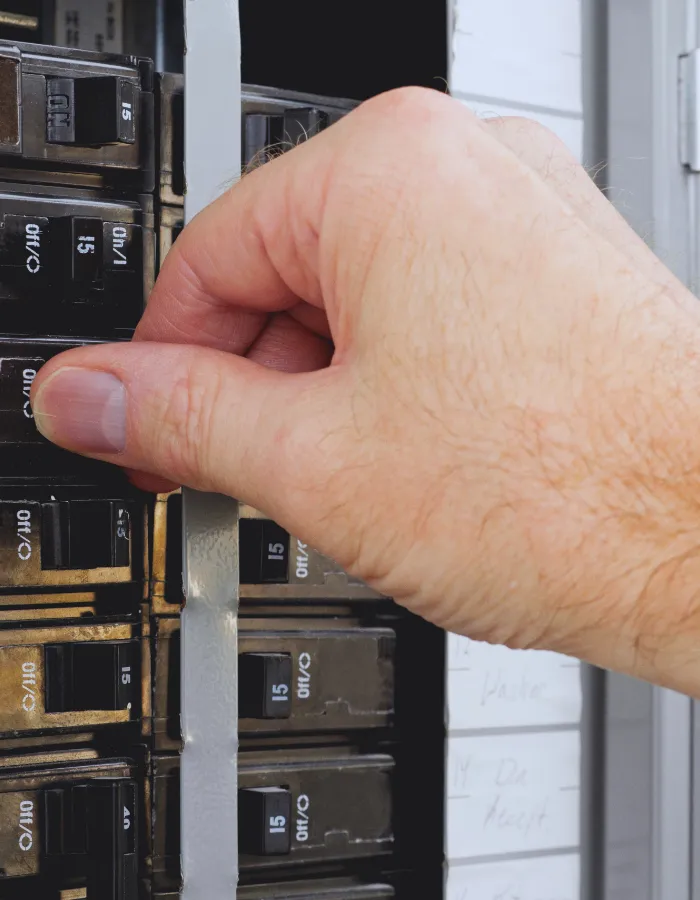
When a breaker trips, it’s cutting power because something unsafe is happening with the flow of electricity. Think of your breaker as a safety valve that automatically shuts off when there’s too much electrical power running through a circuit.
The main breaker and smaller individual circuits inside your breaker box (also called an electrical panel) monitor how much current flows through your system. When the current flow exceeds safe levels, the breaker switch flips to the OFF position.
This power outage in the affected area prevents overheating, electrical shocks, and potential fires. However, if the tripping circuit breaker happens often, that’s a strong indicator of an underlying wiring fault, faulty appliance, or damaged wiring that shouldn’t be ignored.
Common Reasons a Circuit Breaker Keeps Tripping
Here are the most common reasons homeowners in Chicago experience circuit breaker issues and how to identify them.
1. Circuit Overload
A circuit overload occurs when too many devices are plugged into the same circuit. For instance, running space heaters, hair dryers, and vacuum cleaners at once can push your breaker past its limit.
When that happens, circuit breakers trip to stop excess power draw. You might notice lights dimming, warm electrical outlets, or the breaker switch moving to the OFF position after a few minutes of use.
Fix: Unplug some devices, spread your kitchen appliances and electronics across different circuits, or install dedicated circuits for large items like air conditioners or ovens. If your home still uses an old fuse box, upgrading to a modern breaker box is a good idea for safety and efficiency.
2. Short Circuit
A short circuit happens when a hot wire touches a neutral wire or another hot wire inside the circuit. This creates a sudden surge of electricity that trips the breaker instantly.
You may hear a buzzing sound, notice a burning smell, or see scorch marks near outlets, light switches, or light fixtures. This is not something to ignore — short circuits are a serious fire hazard.
Fix: Never attempt to repair a short circuit yourself. The wiring loop that caused the fault could be inside a junction box, outlet, or appliance. A qualified electrician should inspect your home’s wiring and locate the issue safely.
3. Ground Fault
A ground fault occurs when a hot wire comes into contact with a ground wire or moisture, often near bathrooms, kitchens, or outdoor outlets. These faults often trip breakers instantly because they create unsafe paths for electrical current to escape.
Modern homes use ground fault circuit interrupter (GFCI) outlets to protect against this problem. If your breaker keeps tripping near sinks or where water leaks are possible, that’s a sign you need to install or replace GFCI outlets.
Fix: Replace old outlets with GFCI ones, check for moisture, and have a licensed electrician inspect the area for damaged wiring or corrosion.
4. Faulty Appliances
Sometimes a tripped circuit breaker is caused by a single malfunctioning device. Faulty appliances — like a microwave, space heater, or refrigerator — can draw excess power or create internal shorts that trigger the breaker switch.
Test: Unplug all appliances in the affected circuit, reset the breaker, and plug each one in individually. When the breaker trips again, you’ve found the culprit.
Fix: Replace or repair the faulty breaker or appliance. If this happens repeatedly, it’s a good idea to have a professional electrician test the affected area and verify that your home’s electrical system is safe.
5. Faulty or Worn-Out Breaker
Over time, wear and tear can cause breakers to malfunction. A faulty circuit breaker may trip too easily, fail to reset, or refuse to stay on. Older homes in Chicago are especially prone to this due to years of experience behind their aging wiring and electrical components.
Signs include:
- – The main breaker feels warm to the touch
- – The breaker switch won’t stay “on”
- – Frequent tripping with minimal power consumption
Fix: A licensed electrician or electrical contractor should replace the faulty breaker. Never try to handle electrical work inside your switch box yourself — it’s dangerous and should only be done by a trained professional.
6. Damaged or Aging Wiring
If your breaker trips even when few devices are plugged in, damaged wiring might be the problem. Old or frayed wires can cause arc faults, which are small sparks that can lead to electrical fires.
Common signs of bad wiring include flickering lights, burning smells, scorch marks, or outlets that buzz or feel hot. This is especially dangerous in older homes where wiring issues haven’t been inspected in decades.
Fix: Contact a qualified electrician immediately. They can test your breaker box, replace damaged wires, and upgrade your home’s electrical system to meet current electrical safety standards.