Chicago, IL
Available 24/7 - Please Call for an Appointment

If you own an older Chicago home — a Pilsen two-flat, a bungalow on the Northwest Side, a greystone in between — there’s a good chance the wiring behind your walls is older than you are. At some point, most owners of these homes ask the same question: what would it actually cost to rewire the whole thing?
It’s a fair question, and a frustrating one to research, because the honest answer is “it depends.” Rewiring a 1,000-square-foot condo with accessible wiring is a very different job than rewiring a three-story home with plaster walls and knob-and-tube circuits. Below is a straight, no-runaround breakdown of what drives the price, the ranges you can realistically expect, and how to tell whether your home actually needs it — written for Chicago homes specifically, where old housing stock and city permit rules both matter.
At a glance: Rewiring a house typically runs about $8,000–$20,000+, or roughly $2–$4 per square foot, depending on the home’s size, age, wall construction, and scope. Older Chicago homes with plaster walls or knob-and-tube wiring sit at the higher end. Only an on-site estimate gives a real number.
“Rewiring” can mean two very different scopes of work, and the cost gap between them is enormous:
Many Chicago homes don’t need a full tear-out. A licensed electrician often finds that the sensible move is replacing the aging or unsafe circuits while leaving sound, code-compliant wiring in place. That distinction alone can swing a quote by many thousands of dollars — which is exactly why a blanket online “average” is close to useless without someone actually looking at your home.
With that caveat front and center, here are the ranges electricians and cost guides generally cite. These are national figures; the Chicago factors below push toward the top of each range.
| Scope | Typical range |
|---|---|
| Small home / condo (up to ~1,000 sq ft) | ~$4,000 – $10,000 |
| Average single-family home (~1,500–2,000 sq ft) | ~$8,000 – $16,000 |
| Large or multi-story home (2,500+ sq ft) | ~$15,000 – $30,000+ |
| Per-square-foot rule of thumb | ~$2 – $4 / sq ft |
| Partial rewire (targeted circuits) | ~$1,500 – $6,000 |

Treat these as starting points, not quotes. Two homes of identical square footage can differ by 50% or more once you account for wall construction, panel condition, and how much of the wiring is being replaced.
Here’s where the number actually comes from — the factors a good electrician is weighing when they write your estimate:
1. Home size and number of circuits. More square footage means more wire, more outlets and switches, and more labor hours. Rewiring is priced heavily on labor, so size is the single biggest driver.
2. Age of the home and the wiring type. This is the big one in Chicago. Homes built before the 1950s often still have knob-and-tube wiring; homes from the ’60s and ’70s may have aluminum branch wiring. Both are more labor-intensive and, in the case of knob-and-tube, frequently a reason the rewire is happening in the first place. Older systems also tend to have fewer circuits than a modern home needs, so a rewire is often really an upgrade.
3. Wall construction — plaster vs. drywall. Many older Chicago homes have plaster-and-lath walls, which are harder to fish wire through and more work to patch afterward than modern drywall. This is a real cost factor here that homeowners in newer suburbs don’t face to the same degree.
4. Access. Finished basements, no attic access, and multiple floors all add labor. A home where the electrician can run wire through an unfinished basement and open attic costs less than one where every run has to be fished through closed, finished walls.
5. Whether the panel needs to go too. A rewire is often the right moment to replace an undersized or outdated electrical panel — many older Chicago homes still run 60- or 100-amp service that’s maxed out. If your project includes a panel upgrade, that’s an added line item, but doing both at once is usually cheaper than doing them as two separate jobs. (We break those numbers down separately in our guide to electrical panel replacement cost.)
6. Permits and inspection. Electrical work in the City of Chicago requires permits and inspection, and the city has its own electrical code that is stricter than the national baseline in places. A licensed electrician builds the permit and inspection process into the job — it’s not a corner to cut, and it protects you at resale.
Because so much of Chicago’s housing stock predates modern wiring standards, two older systems come up constantly in local rewiring conversations — and both are worth understanding, because they often decide whether a rewire is optional or overdue.
Knob-and-tube (K&T) was the standard from roughly the 1900s through the 1940s, and it’s still hiding in the walls of countless Chicago bungalows, two-flats, and greystones. It runs individual conductors through porcelain knobs and tubes, and it has no ground wire. On its own, undamaged K&T isn’t guaranteed to be dangerous — but it becomes a real problem when it’s been spliced into over the decades by non-professionals, buried under blown-in insulation (which traps heat the system was never designed to shed), or asked to carry the load of a modern household. It’s also brittle with age. Many home insurers now either refuse to write policies on homes with active K&T or charge more for them, which is why a rewire is often triggered by an insurance or a home-sale requirement rather than an outright failure.
Aluminum branch wiring shows up in homes wired in the mid-1960s through the 1970s. Aluminum expands and contracts more than copper as it heats and cools, which over time can loosen connections at outlets, switches, and splices — and loose connections are where overheating and fire risk start. Aluminum wiring doesn’t always require a full rewire; in some cases, proper connectors and remediation at the connection points are enough. A licensed electrician can tell you which situation you’re in rather than defaulting to the most expensive fix.
If your home has either system, don’t panic — but do get it professionally evaluated. Both are common, both are well understood, and both are fixable.
Homeowners often use “rewiring” and “panel upgrade” interchangeably, but they’re different jobs that solve different problems — and knowing which you actually need can save you thousands.
Your electrical panel is the distribution hub; the wiring is everything downstream of it. If your panel is undersized but the wiring in the walls is sound, you may only need a panel upgrade — a far smaller project than a whole-home rewire. Conversely, if the wiring itself is degraded, ungrounded, or knob-and-tube, upgrading the panel alone won’t fix the safety issue behind your walls.
Often the honest answer is “some of both” — and when both are needed, doing them together is usually more cost-effective than as two separate visits, because the electrician is already on site, the permits overlap, and the panel and new circuits get commissioned as one coordinated system. A good electrician will lay out the options plainly instead of quietly quoting you the biggest possible job.
One of the most common follow-up questions — and a real fear for anyone with nice plaster or finished walls — is whether rewiring means gutting the place. The good news: often, no. Experienced electricians use “fishing” techniques to route new wire through existing wall cavities with only small, strategic access holes rather than opening entire walls. It’s slower and more skilled work, but it’s far less destructive than a full tear-out.
That said, it isn’t always fully possible — plaster-and-lath, insulation, and blocked cavities can force more openings. A good electrician will tell you honestly, before the job starts, how much patching to expect. That’s a question worth asking directly in your estimate.
For a typical single-family home, a full rewire usually takes several days to about a week, depending on size, access, and whether a panel upgrade is bundled in. A partial rewire can often be done in a day or two. Your electrician can sequence the work so your home keeps partial power through most of the project rather than going fully dark.
When you get a quote, it helps to know what you’re paying for so you can compare estimates fairly. A complete rewiring estimate from a licensed Chicago electrician generally covers:
Be cautious of a quote that comes in dramatically below the others: it often means permits are being skipped, patching is excluded, or the scope is narrower than you think. The cheapest number on unpermitted electrical work is rarely the cheapest outcome — it can cost you at inspection, at resale, or in a failed insurance claim. A clear, itemized, permitted estimate is worth more than a low round number scribbled on the back of a card.
You don’t rewire a house on a schedule — you do it when the signs are there. Some point to a real safety issue and shouldn’t wait:
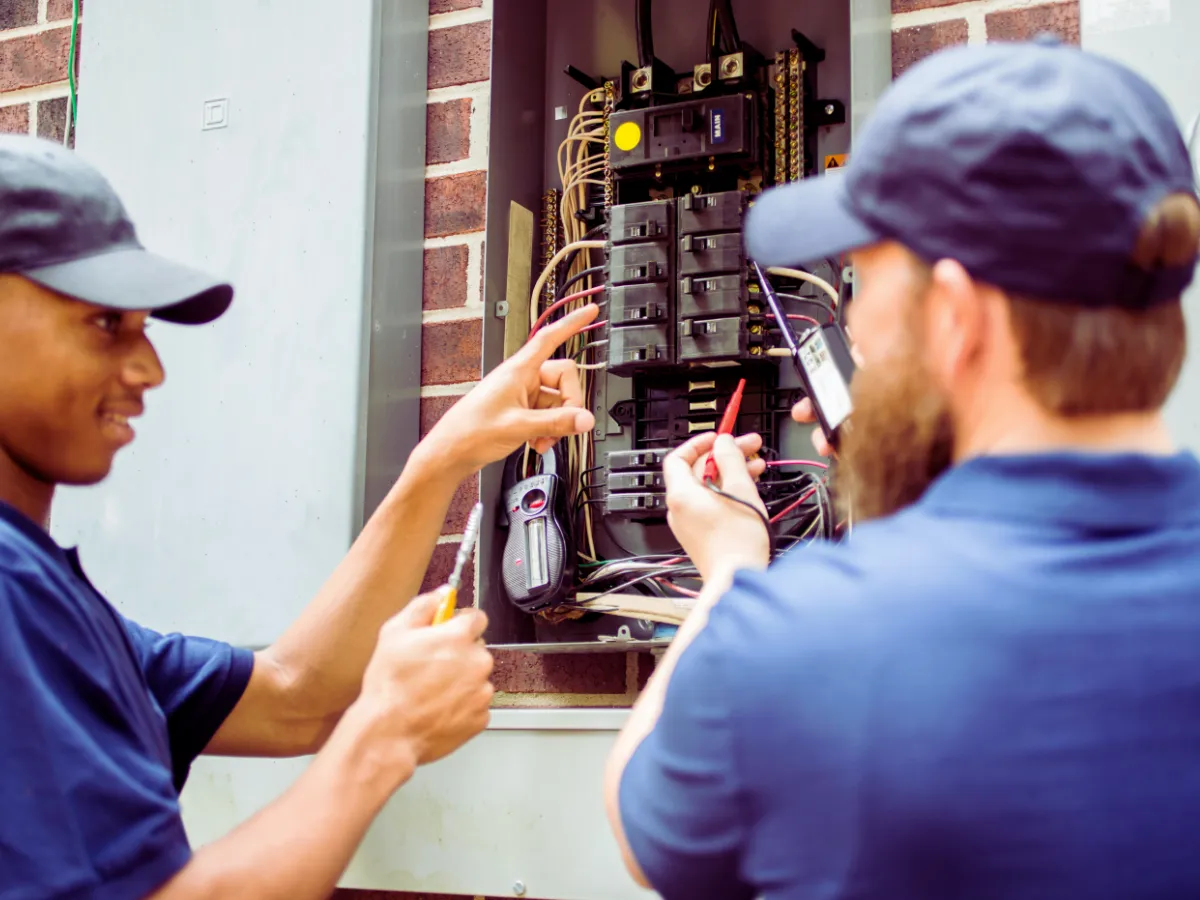
Any one of these is worth a professional look. Several of them together usually means it’s time.
A rewire isn’t a fun thing to spend money on — nobody admires new wiring the way they admire a new kitchen. But it’s one of the highest-value things you can do for an older home. It removes a genuine fire risk, it lets your home actually support modern electrical loads (EV chargers, heat pumps, a panel full of today’s appliances), and it’s a documented, permitted upgrade that pays off at resale. Done by a licensed electrician who pulls the proper permits, it’s a once-in-a-generation job you shouldn’t have to revisit.
Most whole-house rewires run roughly $8,000 to $20,000+, or about $2–$4 per square foot, depending on size, age, wall type, and scope. Older Chicago homes with plaster walls or knob-and-tube wiring tend toward the higher end. A partial rewire of targeted circuits can be considerably less. Only an on-site estimate gives a real number.
A full rewire of a typical single-family home usually takes several days to about a week; a partial rewire is often one to two days. Home size, wall access, and whether a panel upgrade is included all affect the timeline.
Often, yes — electricians fish new wire through existing wall cavities using small access points rather than opening whole walls. Plaster-and-lath and blocked cavities can force more openings, so ask your electrician up front how much patching to expect.
Knob-and-tube isn’t automatically hazardous if it’s undamaged and hasn’t been overloaded or buried in insulation — but it’s ungrounded, brittle with age, and often can’t safely handle modern electrical demand. Many insurers won’t cover homes that still have it. It’s one of the most common reasons Chicago homeowners rewire.
Yes. Electrical work in Chicago requires permits and inspection, and the city enforces its own electrical code. A licensed electrician handles the permitting and inspection as part of the job — it protects your safety and your home’s value.
Every range on this page is just that — a range. The only way to know what rewiring your Chicago home would cost is to have a licensed electrician look at your panel, your wiring, and your walls.
Mr. Mighty Electric is a family-owned team of licensed, insured, and background-checked Chicago electricians, available 24/7 across the city and surrounding suburbs. We’ll walk your home, explain what actually needs to be done (and what doesn’t), pull the proper permits, and give you a clear, honest estimate.
Schedule your free on-site estimate or call (773) 406-7500 today — and get a straight answer for your home, not a range.
Learn more about our whole-home rewiring service in Chicago.

I’m Ed Morales, owner of Mr. Mighty Electric in Chicago. For over 30 years, I’ve helped homeowners and businesses with everything from quick repairs to major electrical upgrades. My team and I take pride in being reliable, straightforward, and always putting safety first.